

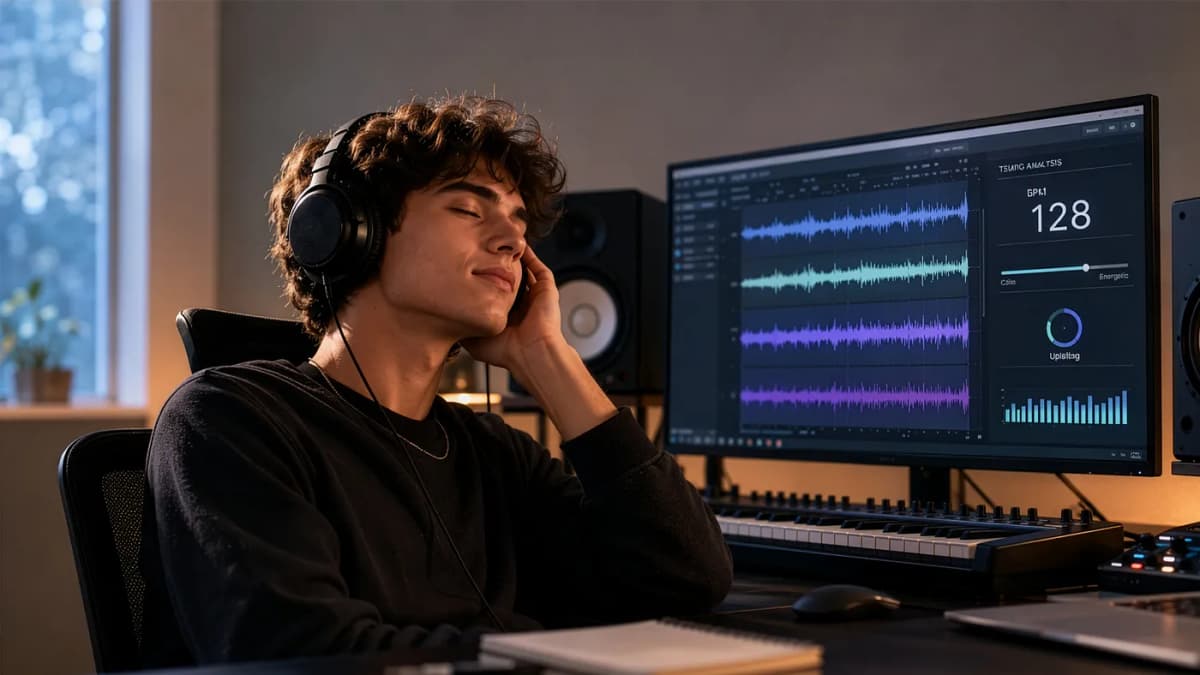
Tempo is one of the main factors that determines whether a song feels fast, slow, calm, or energetic. Tempo describes the speed at which music moves through time and is commonly measured in BPM, or “beats per minute.” While this value provides a technical measurement by indicating how many beats occur within one minute, it can also have a significant influence on how listeners perceive a piece of music.
Tracks with lower BPM values generally create a greater sense of space in time. Longer intervals between beats can allow melodies and vocals to remain audible for longer periods. This structure can be associated with feelings such as calmness, reflection, melancholy, or emotional intensity. However, tempo alone does not determine the emotion of a song. Two tracks with the same BPM can create completely different atmospheres depending on their harmony, instrumentation, vocal performance, and rhythmic emphasis.
As tempo increases, the sense of movement in the music generally increases as well. Beats occurring at shorter intervals can strengthen the track’s energy and feeling of forward motion. This is one reason higher BPM values are frequently used in dance music, electronic music, and certain styles of pop. Rhythmic intensity can make it easier for listeners to respond physically to the music and can contribute to a more dynamic perception of the track.
However, BPM and perceived tempo do not always correspond directly. The way the rhythm is divided, the drum patterns used, and the placement of accents can cause two songs with the same BPM to feel as though they are moving at different speeds. Strong and frequent rhythmic accents may make a track feel faster, while more widely spaced beats can create a broader and calmer feeling within the same tempo. Tempo should therefore be considered not only as a numerical value but also together with rhythmic arrangement.
In the production process, tempo selection is also closely related to the way a song communicates its narrative. Sections with dense lyrics may benefit from wider rhythmic spaces that allow the vocals to be understood more clearly, while an energetic chorus may be supported by a more active rhythmic structure. Some songs maintain the same tempo throughout, while others create the perception of changing speed through arrangement techniques from one section to another.
A listener’s perception of tempo can also be influenced by personal experience. Familiarity with a particular musical genre, rhythmic habits, and the listening environment can all affect whether a track feels fast or slow. The same song may create a different sense of energy when listened to while running compared with hearing it in a quiet environment.
In this sense, tempo is one of the elements that connects the technical structure of music with emotional experience. BPM measures the speed of a track, while rhythm, harmony, performance, and production choices determine how that speed is ultimately experienced by the listener.