

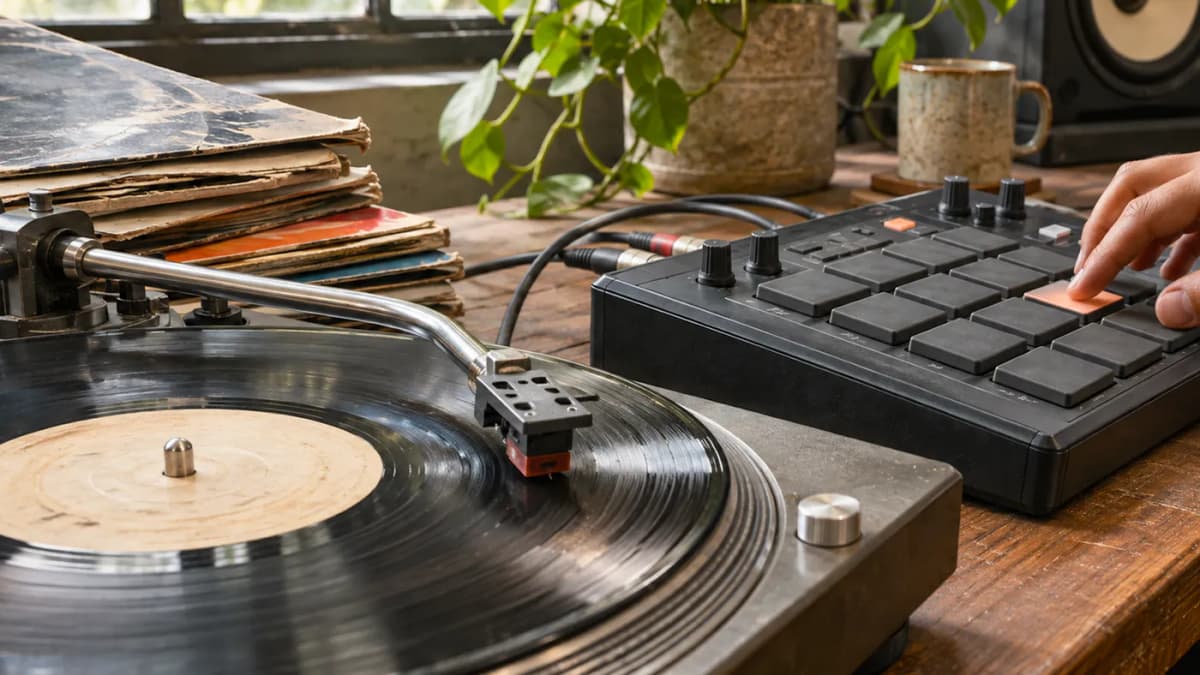
A recording can reappear years later within a completely different song. An old drum rhythm, a few seconds of vocals, a short instrumental section, or an environmental sound can take on a new role in another production. The use of selected portions of previously recorded sounds in new music is known as sampling.
The section chosen as a sample can be very short or considerably longer. A producer may cut the sound, repeat it, change its speed, shift its pitch, or process it with various effects. Through these techniques, a small part of the original recording can become the rhythmic, melodic, or atmospheric foundation of a new track.
Hip-hop played an important role in the development of sampling culture. Producers frequently used drum breaks, bass lines, and melodic passages from old funk, soul, jazz, and disco records as building blocks for new beats. Over time, this approach spread into a much broader range of music, from electronic production to pop.
The creative power of a sample often comes from the way it is reinterpreted. A short detail that originally appeared in the background of a recording can become the central element of a new track. A calm piano section can create a hypnotic motif when cut and repeated. An old vocal recording can take on a completely different emotional character when its speed and pitch are changed.
Sampling can also create interesting connections within musical memory. Listeners who know the original recording may immediately recognize the relationship between the two works. Those who are unfamiliar with the source may experience the same sound as a natural element of the new track. This allows different eras and musical cultures to meet within a single recording.
The technical character of older recordings can also make samples appealing. The warmth of analog recordings, subtle surface noise from vinyl, or instrument tones associated with a particular period can add distinctive character to a new production. Some producers choose to preserve these qualities, while others process the source heavily to create an entirely new sound.
Copyright and usage rights are important considerations in the sampling process. When an existing recording or composition is used, permission from the relevant rights holders may be required. In professional music production, creative processes and legal rights need to be managed together.
Sampling creates a strong bridge between the past and contemporary music production. Sounds found in archives, records, and older recordings can become part of new productions and reach different generations. A small sound recorded many years ago can therefore become the starting point for an entirely new musical narrative.