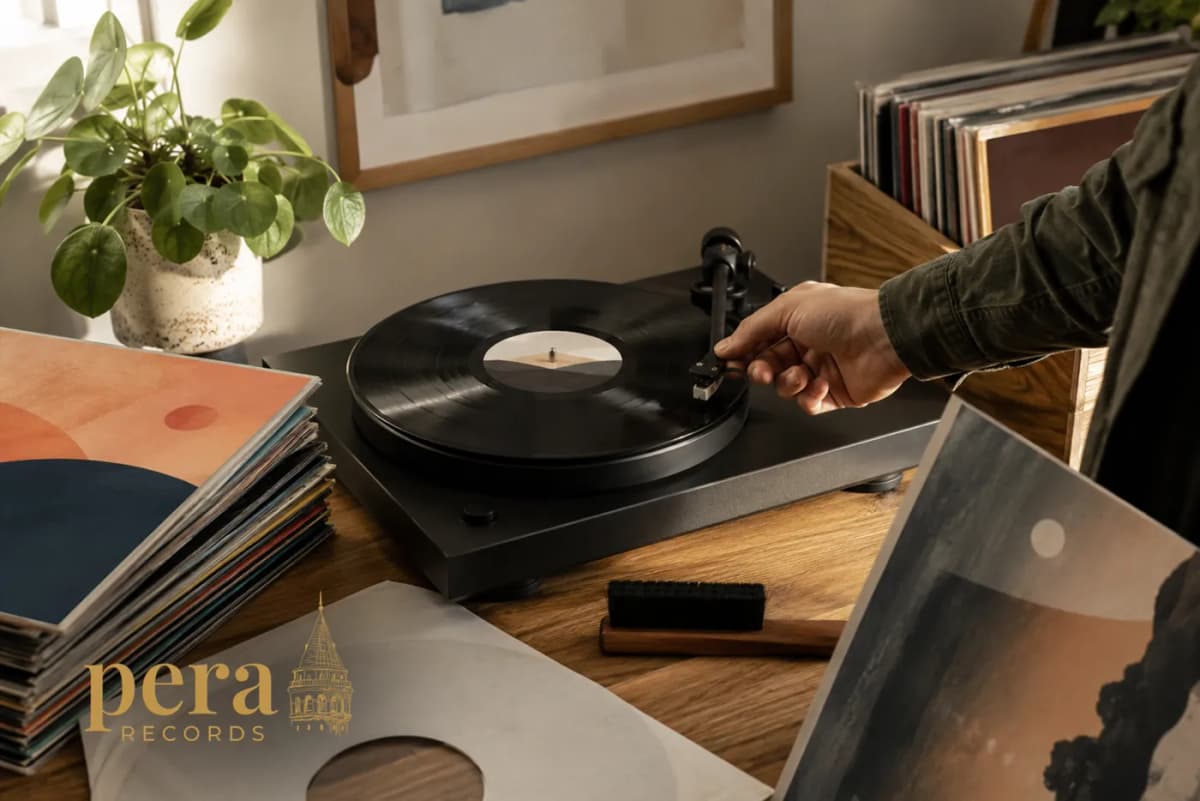
Listening to a vinyl record offers a far more immersive experience than simply playing a song. Examining the cover, placing the record on the turntable, carefully lowering the stylus and listening to the album from beginning to end are all essential parts of the ritual. Alongside its distinctive sound, this slow and attentive listening experience has played an important role in the renewed popularity of vinyl culture.
With the right plan, building a vinyl collection can be quite simple. The first step is choosing a turntable that suits your needs, followed by creating a personal archive filled with records you genuinely want to hear.
Choose Your Turntable First
A turntable forms the foundation of any vinyl collection. When selecting an entry-level model, look for a replaceable stylus, a well-balanced tonearm and a built-in phono preamp. A built-in preamp allows you to connect the turntable easily to active speakers or a compatible sound system.
To preserve the surface and sound quality of your records, choose a high-quality stylus that applies balanced tracking force. Placing the turntable on a flat, stable and vibration-free surface also creates a cleaner listening experience.
The 4-3-2-1 Formula for Your First 10 Records
You can use the 4-3-2-1 formula to shape your collection around your personal musical taste.
Choose your first four records from albums you have loved and listened to for years. Familiar songs and arrangements make it easier to notice the distinctive sound character offered by vinyl.
Use the next three records to explore new genres. You might choose jazz, psychedelic rock, soul, ambient or classical music. The vinyl format encourages focused listening and helps you discover the complete artistic vision behind an album.
Reserve two records for Turkish releases. Anatolian rock, Turkish pop, jazz and alternative music all offer rich catalogues to explore. While Anatolian rock albums from the 1970s attract strong international interest among collectors, vinyl releases from a new generation of independent artists bring a contemporary dimension to any collection.
Make your final record a surprise choice. An album you have never heard before, selected purely because its cover or story captures your attention, can give your collection a distinctive character.
What Should You Look for When Buying Used Records?
When purchasing a used record, hold it toward the light and examine the surface from an angle. Fine surface marks usually have a limited effect on the listening experience, while deep scratches that can be felt with a fingertip may cause skipping or noticeable surface noise.
You can use the Discogs grading system to understand a record’s condition. NM refers to a record that is nearly new, VG+ describes a lightly used and well-preserved copy, and VG indicates more noticeable surface noise. For many collectors, VG+ offers the most balanced combination of quality and value.
Record shops in Beyoğlu and Kadıköy often allow customers to listen before purchasing, giving you an opportunity to assess the record’s actual sound quality.
Essential Vinyl Care Tips
Store your records vertically in antistatic inner sleeves. Use a carbon-fibre brush to remove dust before every listening session. Keep your turntable away from direct sunlight, high humidity and sources of vibration.
A vinyl collection gains meaning through the albums you connect with rather than the number of records on the shelf. Ten carefully selected records can become the beginning of a strong personal archive that truly reflects your musical taste.