

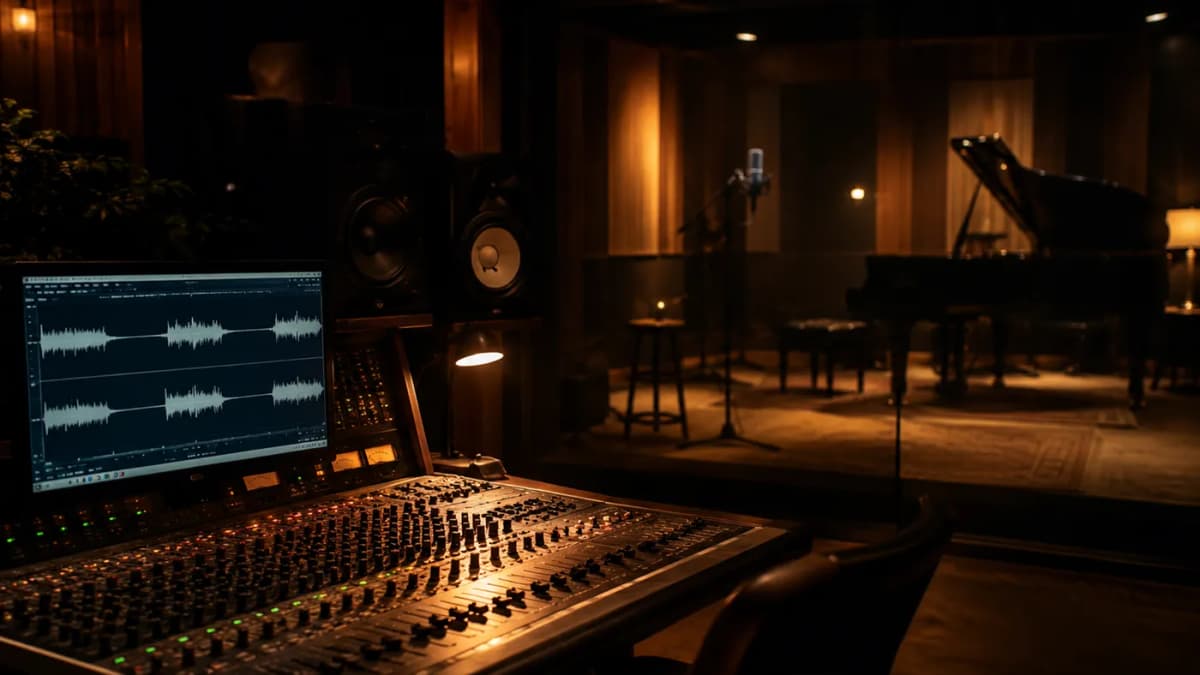
When we think about the elements that make up a song, melody, rhythm, harmony, vocals, and instruments are usually the first things that come to mind. Yet the moments we do not hear can also play an active role in the structure of a composition and its arrangement. From brief pauses between notes to moments when an entire section falls completely silent, silence can be used as a tool to shape rhythm and create distinction between musical ideas.
In music theory, these spaces are not treated as accidental moments. Rest symbols in musical notation indicate that no sound should be produced for a specific duration, and just like notes, they occupy time within a measure. For example, a quarter rest and a quarter note take up the same amount of time, while only one of them produces sound. In this sense, silence becomes not an interruption outside the rhythmic structure, but one of the elements that determines how time is divided within music.
The effect of silence can become especially noticeable in recurring rhythmic or melodic structures. A sequence of sounds that continues without interruption creates a different sense of movement from one that stops at certain points. The placement of rests can help listeners sense where a musical phrase begins and ends, while also creating anticipation for the next sound. From this perspective, silence can be considered an arrangement tool that changes the perceived flow of a piece without altering its tempo.
A similar approach is used in the production process. In an arrangement example from Berklee, completely muting sections between sounds is described as creating stronger contrast, while pulling the drums back in a particular section can make a musical change more noticeable. The fact that Berklee Online’s music production training addresses “Silence and the Space between the Notes” together with the emotional timeline and song form also points to the role of space in production.
Silence can also become part of the expression in vocal performance. A short pause after a lyric can help the following line stand out more clearly. Similarly, after a dense instrumental section, pulling back certain layers can strengthen the feeling of moving into another part of the song. The effect does not come only from the length of the silence; what comes before the space and what is heard after it also shape the result.
For this reason, space in music does not have to be understood simply as the absence of sound. When it is planned together with notes, rhythm, and arrangement decisions, silence can become one of the creative materials that shapes a track’s movement, contrast, and expression. Sometimes, what makes the next note more powerful is the few seconds of sound that are not heard immediately before it.