

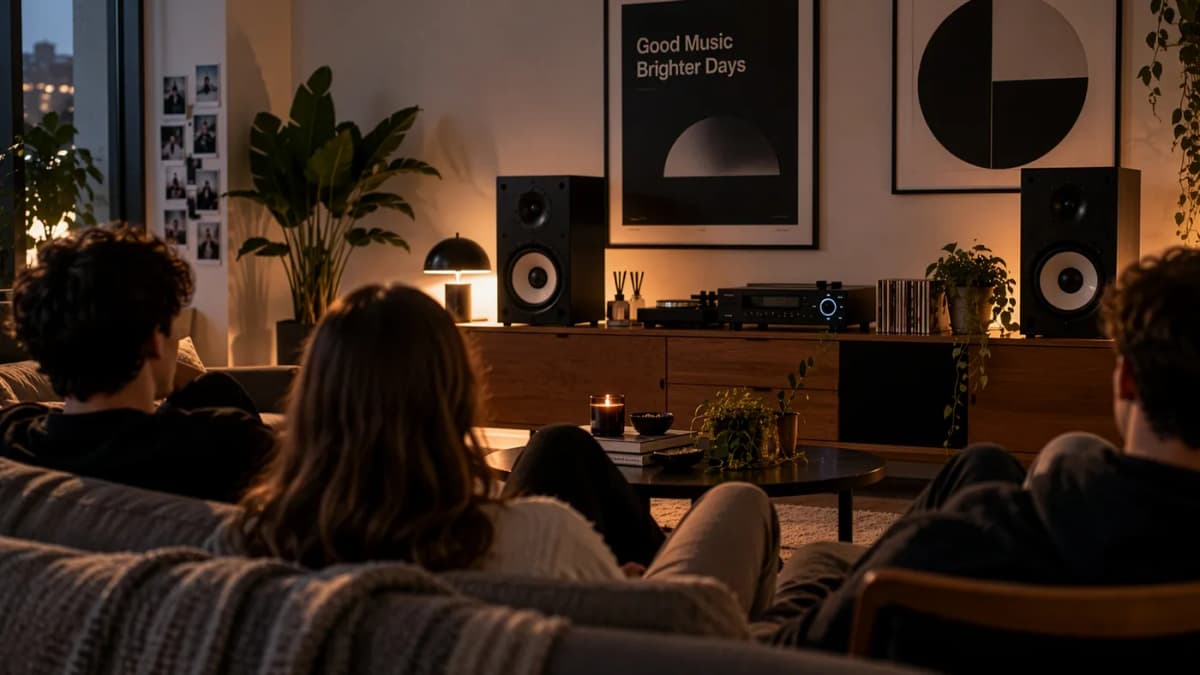
The same song can take on a different character when heard through headphones compared with speakers. The reason is not simply the quality of the equipment being used. The way sound reaches the ears, the acoustics of the surrounding environment, the placement of speakers, and the surfaces within the space can all directly affect the listening experience. For this reason, how a track is heard depends not only on the recording itself but also on the environment in which it is played.
When using headphones, sound reaches the ears directly while largely reducing the influence of the surrounding environment. The left and right channels can be separated more clearly, making the position of the vocals, background effects, small details, and stereo arrangements easier to notice. Panning decisions used during production—the placement of sounds between the left and right channels—can be especially noticeable when listening through headphones.
With speaker systems, however, sound first spreads into the surrounding environment. In addition to the direct sound from the speakers, reflections from walls, ceilings, floors, and furniture also reach the listener’s ears. These reflections can give the music a spatial character. This acoustic interaction is one reason why the same speaker system can sound different in a small room filled with furniture compared with a large space with high ceilings.
Bass frequencies are one of the areas where this difference becomes particularly noticeable. Headphones reproduce low frequencies from a position close to the ears, while speakers allow bass to spread physically throughout the room. The size of the space, the distance between the speakers and the walls, and the listener’s position can cause bass frequencies to sound stronger in some areas and weaker in others. For this reason, moving only a few steps within a room can sometimes create a noticeable change in the balance of a track.
This is also why using different listening systems is important during music production. A mix that sounds successful only through studio monitors may not necessarily be enough. Checking the track through headphones, phone speakers, car audio systems, or speakers of different sizes can help determine how it behaves under a variety of listening conditions. Preserving the main elements of a production across different systems can contribute to a more consistent listening experience.
The method of listening can also influence the emotional perception of music. Headphones can create a more personal and intimate experience, while speakers bring sound into the physical environment and create an atmosphere that can be shared with others. Hearing a vocal as though it is very close to the ear creates a different perspective from hearing the same vocal coming from across the room.
From this perspective, the perception of music is shaped by more than the sounds contained within the recording itself. The way sound reaches the ear and the environment in which listening takes place are also important factors that can reshape the character of a recording.