

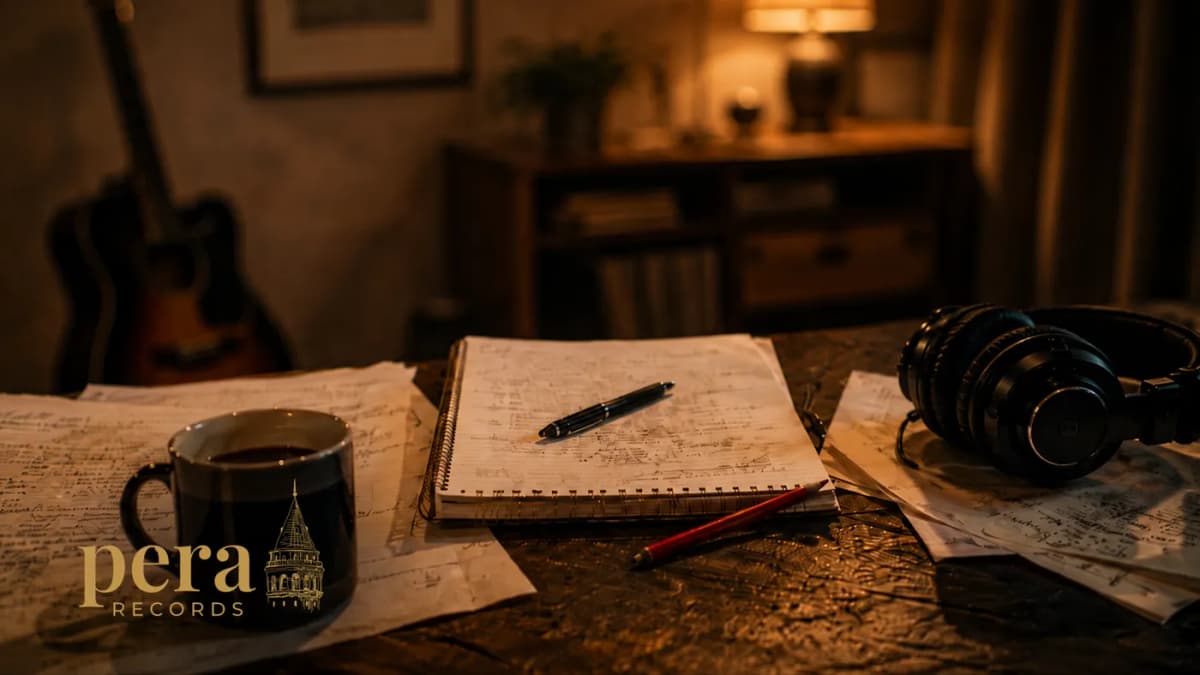
When we listen to a song, we usually hear only its finished version. The vocals are in place, the instruments complement one another, the rhythm rises at just the right moment, and within a few minutes, a complete musical world unfolds. Yet the process that begins long before the record button is pressed is just as important as the version we ultimately hear. The journey from an initial idea to a finished recording is shaped by countless decisions, from composition and arrangement to performance and sound selection.
It often begins with a small idea. A melody, a few words, a particular rhythm, or simply a feeling the artist wants to create can provide the first spark. Over time, that idea grows. Lyrics change, parts of the melody are rewritten, and different tempos are explored. A section that initially seems powerful may later be removed, while a seemingly minor detail can become the most memorable part of the song.
Once the composition takes shape, the next step is deciding what kind of world the song will inhabit. The choice of instruments, the density of the sounds, and the moments when the track builds or pulls back all begin to take form at this stage. The same melody can feel intimate and fragile with only piano and vocals, while a different arrangement can transform it into something far more energetic or powerful. Arrangement, therefore, does more than provide a background for the song; it also shapes the emotional character of what the song is trying to express.
When the process moves into the studio, preparation enters a new phase. Everything from microphone selection and instrument placement to vocal interpretation and the acoustics of the recording space can influence the final result. Yet a good recording is not simply a collection of technically perfect sounds. Sometimes a breath, the natural vibration of an instrument, or an unexpected moment during a performance can give a track its distinctive character.
Performance also plays a defining role in a song’s identity. Two artists can interpret the same lyrics and melody in completely different ways. Vocal tone, the emphasis placed on certain words, the spaces between phrases, and the relationship between the performer and the rhythm can all change how the listener connects with a song. For this reason, the recording process is not only about hitting the correct notes; preserving the emotion the song is meant to convey is equally important.
The process does not end once the recording is complete. During mixing, the relationship between the recorded sounds is refined so that the vocals, instruments, and rhythm can be heard in balance within the same sonic space. Mastering then brings the track to its final form, ready for release. The music a listener experiences in just a few minutes is actually the result of this much longer creative process.
Perhaps this is exactly what makes the unseen story of a song so special. Behind the final recording are dozens of small decisions, experiments, abandoned ideas, and fresh starts. Pressing the record button is not simply the moment when music is captured; it is the point at which a story that has already taken shape in the mind, in a room, or at an instrument is finally transformed into sound.