

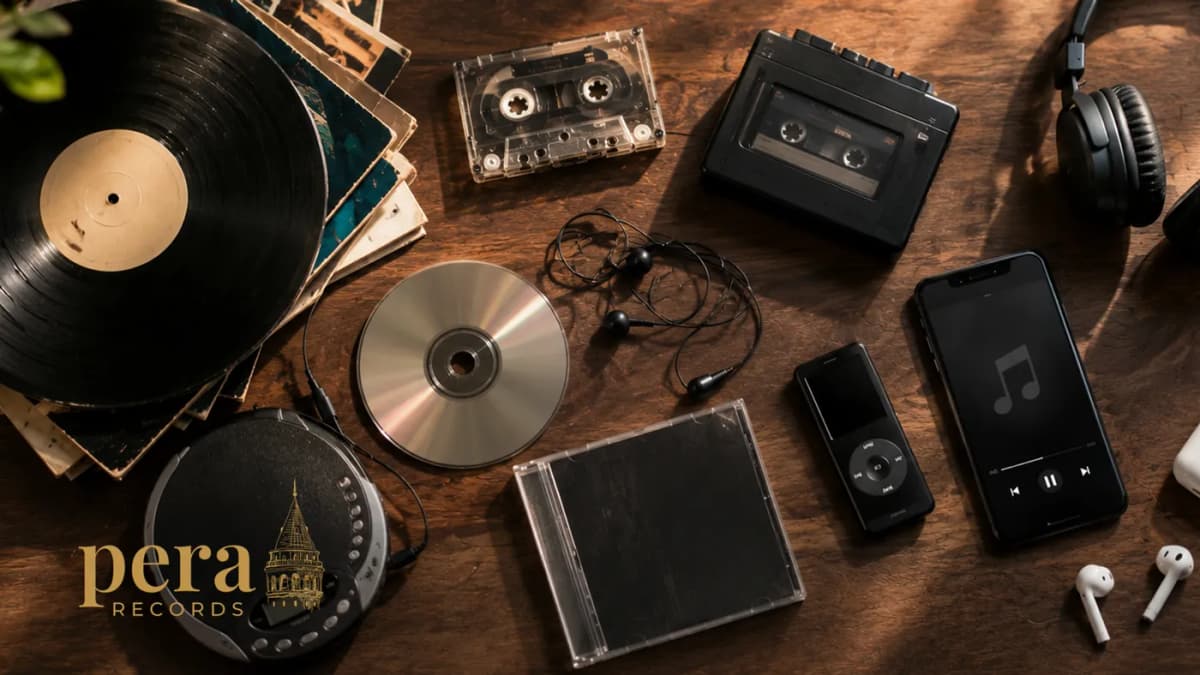
Music has never disappeared from our lives, but the way we access and listen to it has changed significantly over the years. There was a time when going to a record store for a favorite album, rewinding a cassette, or buying a newly released CD was a natural part of the music experience. Today, however, we can access millions of songs on our phones within seconds. This transformation has changed more than just the tools we use; it has also reshaped our relationship with albums, our music discovery habits, and the amount of time we devote to a song.
During the cassette era, listening to music was based on a more limited selection compared with today. When an album was purchased, it was usually listened to from beginning to end, and the songs became part of memory in the order in which they appeared on the album. Since moving from one track to another was not as quick as it is today, the album as a whole carried greater importance. Creating mixtapes was also one of the distinctive rituals of the period. Recording selected songs from different albums one by one took time, and the finished cassette often became a small musical archive of a particular period, person, or emotion.
With CDs, listeners began to move through albums more easily. It became possible to jump directly to a desired track, while the habit of fast-forwarding or rewinding cassettes gradually disappeared. Even so, music still entered our lives together with a physical object. Details such as album covers, booklets, lyrics, and design remained part of the listening experience. Owning an album meant more than simply accessing the songs; it also meant encountering the entire world created by the artist.
As MP3s and portable digital music players became widespread, this relationship evolved in a different direction. It became possible to carry hundreds of songs on a small device. The habit of selecting individual tracks rather than full albums grew stronger, while personal music collections moved from shelves to computer folders. Listeners could create their own playlists more quickly and discover different artists more easily.
Streaming services took music discovery to an entirely new level. Today, it is possible to instantly access songs produced in different parts of the world, move between dozens of genres, and discover new artists through personalized playlists. A music library is no longer limited by the number of physical recordings a person owns; it has become a much broader field of access.
This convenience has also changed the speed of listening. As accessing a song became easier, so did abandoning it and moving on to another track. At the same time, the continuing interest in vinyl records and cassettes shows that the physical experience of music still holds strong appeal.
Throughout the journey from cassettes to streaming, formats, devices, and habits have changed. The connection between music and memory, however, has remained. No matter what device we listen through, sometimes just a few seconds of a melody are still enough to take us back to a moment from years ago.