

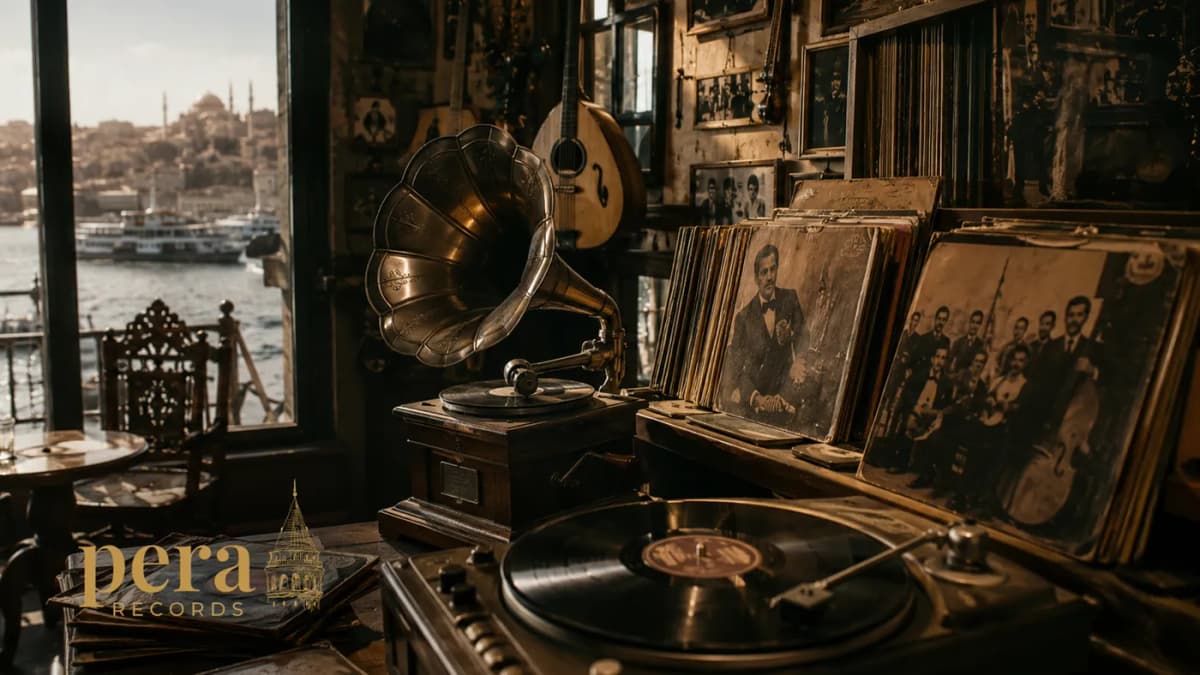
Can Istanbul be remembered through images alone? The Bosphorus, ferries, old apartment buildings, crowded avenues, and narrow streets all shape the memory of the city, but music is also one of its most powerful elements. Songs recorded in different eras, performance venues, gazinos, vinyl records, and changing listening habits offer important clues to how Istanbul once lived and how its sound has transformed over time. Rather than belonging to a single genre or period, Istanbul’s musical memory has been shaped by layers of different musical cultures accumulated over the years.
The arrival of sound-recording technologies in Istanbul marked an important turning point in preserving this memory. According to records in the Istanbul Encyclopedia archive, the phonograph was first used in Türkiye in Istanbul, while gramophone and record culture soon became part of everyday urban life. Gülistan Store, which operated in Sirkeci, was recorded as one of the places where the first phonograph cylinders recorded in Istanbul and the earliest gramophone records were sold. As gramophone records became more widespread, vocalists and instrumental performers of the period were also able to reach broader audiences.
Records did more than preserve music; they also carried the performance styles, voices, and cultural encounters of their time into the present. During the early years of the Republic, prominent performers of Turkish music appeared on recordings released by companies such as Sahibinin Sesi, Odeon, and Columbia. The Istanbul Encyclopedia archive also documents Vahram Gesaryan’s role in the Turkish operations of Sahibinin Sesi and his work with Turkish vocal and instrumental artists. These records show that record culture became more than a listening habit in Istanbul’s musical life. It also served as a medium of memory that allowed artists and their works to reach future generations.
Over time, the city’s musical memory moved into different settings. From gazinos and concert halls to arcades and independent venues, different parts of Istanbul developed their own musical communities. SALT’s research on Istanbul’s underground music scene in the 1990s highlights the role of Beyoğlu’s streets, arcades, concert venues, and fanzine culture in the development of punk and independent music circles. In this way, the same city became both a recording center for traditional music and, in later periods, a meeting point for alternative music movements.
Today, although music is mostly consumed through digital platforms, the memory carried by recordings remains significant. A vinyl record, an old recording, or a newly interpreted piece contains more than a melody; it also preserves the performance sensibilities and musical culture of the period in which the work was created.
Founded in Istanbul’s historic Pera district in 2022, Pera Records continues this approach as an independent record company that aims to bring Anatolia’s musical heritage together with a contemporary production perspective. Combining traditional sounds with modern production, Pera Records works across different stages of the music-making process, including recording, publishing, visual identity, live performance, and music rights management. In this way, sounds from the past continue to form part of a living musical memory carried into the future through new productions.