

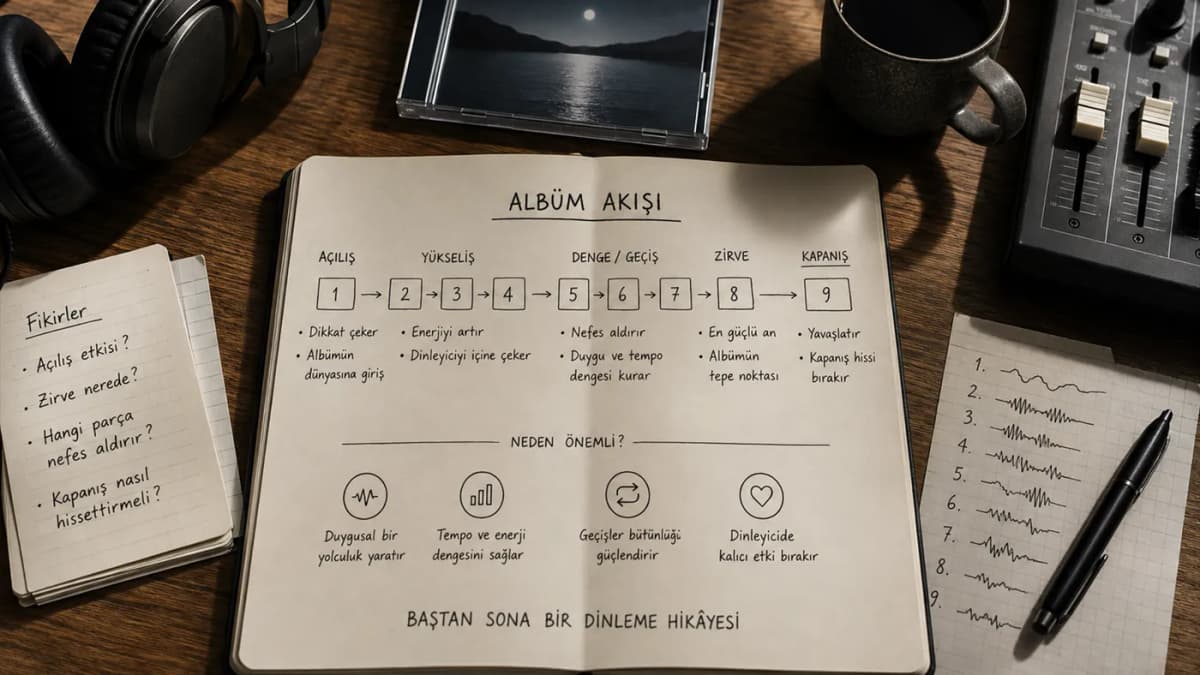
An album is more than simply a collection of songs released under the same project. The order in which tracks reach the listener, where the album builds in intensity or becomes calmer, and how the beginning and ending connect with one another can all shape the overall listening experience. For this reason, track sequencing stands out as one of the key creative decisions in album preparation. During the mastering process, the order of the tracks, the spaces between them, and the sonic relationships they create with one another are also considered as part of the album as a whole.
The first song on an album is the listener’s initial point of contact with the project’s sonic world. In some projects, the opening track introduces the album’s overall atmosphere, while in others it is used to create a stronger sense of impact from the start. In a similar way, the closing track can shape the final impression left by the listening experience. Throughout music history, there have been many examples of artists placing particular importance on their opening and closing tracks and shaping the sequence accordingly.
In the middle section of an album, the energy of the tracks and the relationships between them become especially important. A sequence made up of several high-tempo songs in a row does not create the same effect as a flow in which calmer tracks are placed in between. Changes in tempo, intensity, tonal character, and vocal levels can influence the sense of continuity listeners perceive when moving from one track to the next. For this reason, songs are often evaluated not only individually, but also in terms of how they sound when heard one after another.
The silence between songs is also part of the sequencing process. Some projects leave a noticeable gap between tracks, while in other albums one song may flow directly into the next. Shortening, extending, or completely removing the transition time can change the overall flow of the album. By the time the project reaches the mastering stage, having the intended track order established and any special transitions defined in advance can help ensure that the album is completed in the way it was originally envisioned.
Sequencing also makes it possible to manage contrast within an album. Moving from a dense, intense track into a more minimal arrangement can create the feeling of entering a new section, while placing songs with similar characteristics back to back can establish a more continuous atmosphere. There is no single correct formula for track sequencing. The choice depends on the musical character of the album and the kind of relationship intended between the tracks.
Even though digital platforms allow listeners to access any song on an album directly, track order still matters when the project is experienced as a complete work. A flow that is carefully considered from beginning to end can create meaningful connections between the opening, development, transitions, and closing sections. In this way, an album can become more than a list of songs placed next to one another and develop into a more cohesive musical narrative.